
- Bible
- Read the Bible
- Bible Versions
- Verse of the Day
- Reading Plans
- Verses by Topic
- Books of the Bible
- Bible Images
- Study
- Commentaries
- Concordances
- Dictionaries
- Encyclopedias
- Sermons
- Bible Atlas & Maps
- BP Wiki
- Devotionals
- Today's Devotionals
- Light of the World
- All Devotionals
- Inspirational Quotes
- More
- Picture Quotes
- Videos
- Inspirational
- Bible Study
- What The Bible Says
- Bible Q&As
- Daily Bread
- Bible by Genre
- Bible Stories
- Random Bible Verse
- Community
- Store
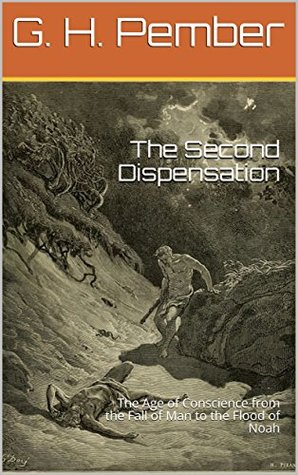
The Second Dispensation: The Age of Conscience from the Fall of Man to the Flood of Noah
by G.H. Pember
Scriptural dispensationalist have identified seven basic periods during which God is sovereignly ruling the world as He executes His plan for history through progressive stages of revelation. In his popular reference Bible (1909) C. I. Scofield identified these periods as Innocency, Conscience, Human government, Promise, Law, Grace, and Kingdom. During each dispensation mankind is tested in respect of obedience to some specific revelation of the will of God. Failure to live up to God’s standard brings judgment. The Fall of Adam and Eve’s during the first dispensation brought expulsion from the Garden of Eden and eventual physical death. The second dispensation, the Age of Conscience, which is the subject of this book, eventually resulted in the world-wide judgment of the great flood in the days of Noah.
Unfortunately, the sins of the world that brought on the near extinction of mankind during the Age of Conscience, are being repeated in these last days of Christendom. Mr. Pember noted, “If they clothe themselves with the semblance of devotion in their worship, they altogether lose this outward distinction in the world, and bewilder those who are honestly asking what they shall do to be saved by plunging into all the gaieties, frivolities, pursuits, and business of this life, as if they were to remain among them forever. They act as though God had promised that they at least should not be hurried out of the world as so many of their fellows are, but should have due warning and ample space and inclination for repentance. The powers of the world to come have lost their hold upon them. So many points have been yielded, amusements permitted, and vices condoned, that it is almost impossible to distinguish them from non-professors unless they recite their creed. And although many are ready to confess that the Christian must take up his cross, yet being thoroughly satisfied that in these modern times the unwearied zeal of Christ and His apostles would be quite out of place, they can by no means find a cross to bear. If, however, God in His anger smite them with sickness, bereavement, disappointment, or loss, they talk of their trials, and comfort themselves with the thought that they are imitating the Lord by enduring troubles which they cannot in any way avoid.”
Unfortunately, the sins of the world that brought on the near extinction of mankind during the Age of Conscience, are being repeated in these last days of Christendom. Mr. Pember noted, “If they clothe themselves with the semblance of devotion in their worship, they altogether lose this outward distinction in the world, and bewilder those who are honestly asking what they shall do to be saved by plunging into all the gaieties, frivolities, pursuits, and business of this life, as if they were to remain among them forever. They act as though God had promised that they at least should not be hurried out of the world as so many of their fellows are, but should have due warning and ample space and inclination for repentance. The powers of the world to come have lost their hold upon them. So many points have been yielded, amusements permitted, and vices condoned, that it is almost impossible to distinguish them from non-professors unless they recite their creed. And although many are ready to confess that the Christian must take up his cross, yet being thoroughly satisfied that in these modern times the unwearied zeal of Christ and His apostles would be quite out of place, they can by no means find a cross to bear. If, however, God in His anger smite them with sickness, bereavement, disappointment, or loss, they talk of their trials, and comfort themselves with the thought that they are imitating the Lord by enduring troubles which they cannot in any way avoid.”
BUY NOW
Kindle Edition, 64 pages
Published April 10th 2017
Subscribe
Get Bible verse every day in your inbox
Read on Mobile



Group of Brands


















© 2026 Bibleportal.com All rights reserved.
G. H. Pember (1837 - 1910)
Was an English theologian and author who was affiliated with the Plymouth Brethren. Pember's conversion to Christianity led him to participate in the Brethren, and from within that movement he developed his career as an author and teacher of biblical and theological themes. The Brethren emerged in the 1820s as an independent movement that protested about the ecclesiastical divisions of Protestant churches.[9] Prominent leaders within the Brethren such as Anthony Norris Groves, George Müller and John Nelson Darby were persuaded that there were biblical teachings that were overlooked or not consistently taught by the Protestant churches such as practising adult baptism only (hence rejecting infant baptism), restricting the observance of the Lord's Supper (partaking of the emblems of bread and wine representing Jesus Christ's atoning sacrifice) to baptised members, and biblical prophecies about the imminent return of Christ to the world.His book Earth's Earliest Ages, which went through several editions, had two principal objectives. Pember wrote in the preface to the first edition: "To remove some of the Geological and other difficulties usually associated with the commencing chapters of Genesis" and "to show the characteristic features of the Days of Noah were reappearing in Christendom, and therefore, that the Days of the Son of Man could not be far distant." To read and obtain published materials by G.H. Pember you can visit the ministry of Schoettle Publishing.
... Show more