
Quote by Thomas a Kempis

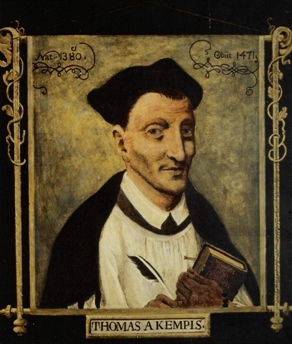
“And so sovereign Providence has often produced a remarkable effect--evil men making other evil men good. For some, when they think they suffer injustice at the hands of the worst of men, burn with hatred for evil men, and being eager to be different from those they hate, have reformed and become virtuous. It is only the power of God to which evils may also be good, when by their proper use He elicits some good result.”
Be the first to react on this!



Group of Brands


















© 2025 Bibleportal.com All rights reserved.
Thomas a Kempis (1380 - 1471)
Was a canon regular of the late medieval period and the most probable author of The Imitation of Christ, which is one of the best known Christian books on devotion. His name means "Thomas of Kempen", his hometown, and in German he is known as Thomas von Kempen. He also is known by various spellings of his family name: Thomas Haemerken; Thomas Hammerlein; Thomas Hemerken and Thomas Hämerken.His first tenure of office as subprior was interrupted by the exile of the community from Agnetenberg (1429). A dispute had arisen in connection with an appointment to the vacant See of Utrecht. Pope Martin V rejected the nomination of Bishop-elect Rudolf van Diepholt, and imposed an interdict. The Canons remained in exile in observance of the interdict until the question was settled (1432). During this time, Thomas was sent to Arnhem to care for his ailing brother. He remained there until his brother died November, 1432. Thomas spent his time between devotional exercises, composition, and copying. He copied the Bible no fewer than four times,[3] one of the copies being preserved at Darmstadt, Germany in five volumes. In its teachings he was widely read and his works abound in Biblical quotations, especially from the New Testament.
Thomas a Kempis was a late Medieval Catholic monk and probable author of The Imitation of Christ, one of the best known Christian books on devotion.
His writings are all of a devotional character and include tracts and meditations, letters, sermons, a life of Saint Lydewigis, a Christian woman who remained steadfast under a great stress of afflictions, and biographies of Groote, Radewijns, and nine of their companions. Works similar in content to the Imitation of Christ, and pervaded by the same spirit, are his prolonged meditation on the life and blessings of the Savior and another on the Incarnation. Both of these works overflow with adoration for Christ.