
Quote by Athanasius

“But if, without any illness and without any pain, he had hidden his body away by itself privately and "in a corner" (Acts 26.26), or in a desert place or by a house or anywhere at all, and afterwards suddenly appearing again said he had raised himself from the dead, he would have been supposed by all to be telling tall tales and would have been distrusted even more when speaking about the resurrection, as there would be no one at all to witness his death. Death must precede resurrection, for there would be no resurrection without death preceding, so that if the death of the body took place somewhere in secret, death neither appearing nor taking place before witnesses, its resurrection would also be unseen and unwitnessed.”
Be the first to react on this!



Group of Brands


















© 2025 Bibleportal.com All rights reserved.
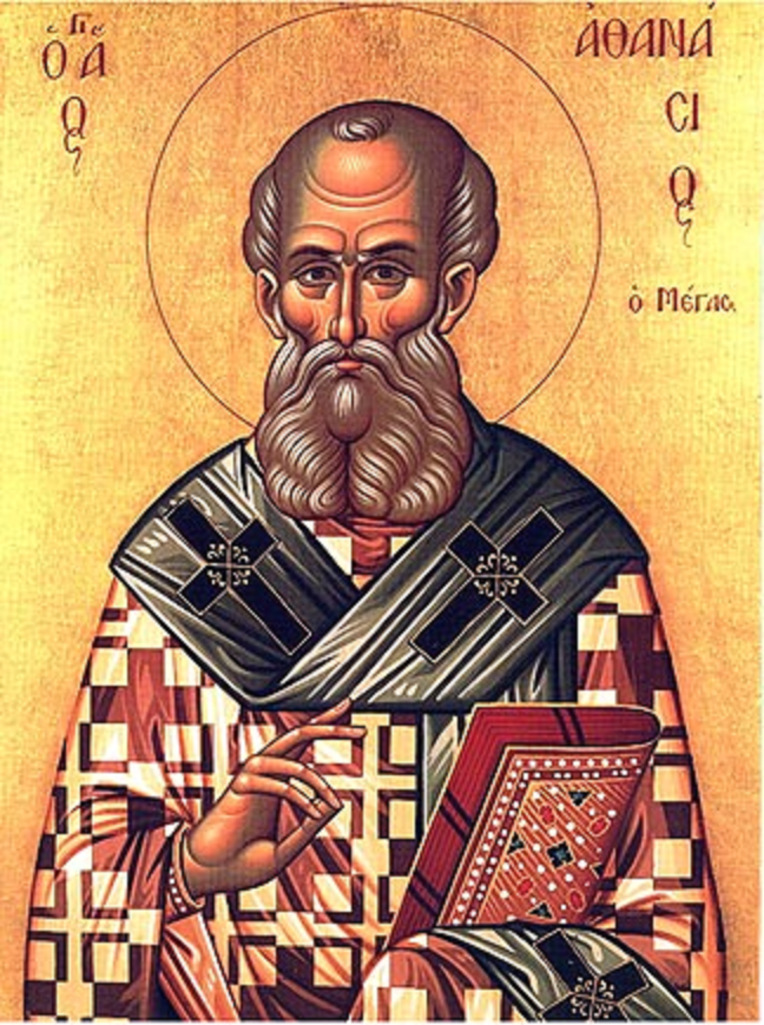
St. Athanasius (296 - 373)
Saint Athanasius of Alexandria (/ˌæθəˈneɪʃəs/; Greek: Ἀθανάσιος Ἀλεξανδρείας, Athanásios Alexandrías; c. 296–298 – 2 May 373), also called Athanasius the Great, Athanasius the Confessor or, primarily in the Coptic Orthodox Church, Athanasius the Apostolic, was the twentieth bishop of Alexandria (as Athanasius I). His episcopate lasted 45 years (c. 8 June 328 – 2 May 373), of which over 17 were spent in five exiles ordered by four different Roman emperors. Athanasius was a Christian theologian, a Church Father, the chief defender of Trinitarianism against Arianism, and a noted Egyptian leader of the fourth century..Within a few years after his death, Gregory of Nazianzus called him the "Pillar of the Church". His writings were well regarded by all Church fathers who followed, in both the West and the East, who noted their rich devotion to the Word-become-man, great pastoral concern, and profound interest in monasticism. Athanasius is counted as one of the four great Eastern Doctors of the Church in the Roman Catholic Church.[3] In the Eastern Orthodox Church, he is labeled as the "Father of Orthodoxy". Some Protestants label him as "Father of the Canon". Athanasius is venerated as a Christian saint, whose feast day is 2 May in Western Christianity, 15 May in the Coptic Orthodox Church, and 18 January in the other Eastern Orthodox Churches. He is venerated by the Oriental and Eastern Orthodox Churches, the Roman Catholic Church, the Lutherans, and the Anglican Communion.