
- Biblia
- Leer la Biblia
- Versiones de la Biblia
- Verso del dia
- Planes de lectura
- Versos por tema
- Books of the Bible
- Imágenes De La Biblia
- Estudio
- Comentarios
- Concordancias
- Diccionarios bíblicos
- Enciclopedias bíblicas
- Sermones
- Bible Atlas & Maps
- BP Wiki
- Devocionales
- Devocionales de hoy
- Light of the World
- Todos los devocionales
- Inspirational Quotes
- Más
- Picture Quotes
- Videos
- Inspirador
- Estudio Bíblico
- Lo que dice la Biblia
- Bible Q&As
- Daily Bread
- Bible by Genre
- Bible Stories
- Random Bible Verse
- Comunidad
- Store
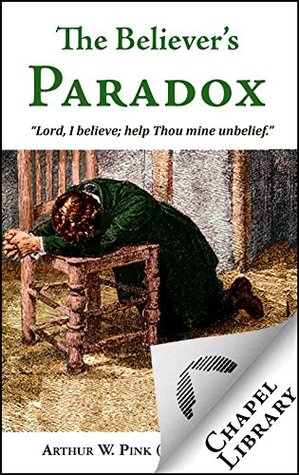
The Believer's Paradox
by A.W. Pink
Another quality eBook from Chapel Library.
“Lord, I believe; help thou my unbelief.”—Mark 9:24
1. Introduction
This was the honest confession of one whose faith had been put to a most severe test. It issued from a man who had a son possessed by a demon, which grievously tormented him: “wheresoever he taketh him, he teareth him: and he foameth, and gnasheth with his teeth, and pineth away” (Mar 9:18). What a sore trial was that for a tender parent! How thankful you should be, my reader, if in the sovereignty of God you are blest with normal and healthy children; and how sympathetic we should be toward those who have afflicted ones! No doubt this man had consulted different physicians, and perhaps had conferred with his pastor; but no relief had been obtained. What a testing of his submission to the will of God! Then he sought aid from Christ’s disciples, but they had been unable to effect any cure, and “hope deferred maketh the heart sick” (Pro 13:12). Such, in brief, is the background of our text.
And now the great Physician commanded that the tormented one should be brought to Him, but we read “And when he saw him, straightway the spirit tare him; and he fell on the ground, and wallowed foaming” (v. 20). Yes, matters generally seem to get worse with us when the Lord begins to take us in hand—to demonstrate that our extremity is God’s opportunity to manifest His sufficiency. It was thus with the afflicted Hebrews in Egypt. The darkest hour precedes the dawn. But what a tremendous testing of this man’s faith to behold his poor son foaming in agony at the Saviour’s feet! “And He asked his father, How long is it ago since this came unto him? And he said, Of a child. And ofttimes it hath cast him into the fire, and into the waters, to destroy him: but if thou canst do anything, have compassion on us, and help us” (vv. 21-22). Did the Lord Jesus indignantly rebuke him for questioning His power, and turn away in disgust? No, for “great is his mercy” (Psa 103:11). Instead, He answered, “If thou canst believe, all things are possible to him that believeth” (v. 23), and we are told “And straightway the father of the child cried out, and said with tears, Lord, I believe; help thou mine unbelief.”
2. The Paradox Presented
“Lord, I believe; help thou mine unbelief.” How paradoxical was this language, for it was almost, if not quite, a contradiction in terms. If this man was a genuine believer, then why should he bemoan his unbelief? Or, since he bemoaned his unbelief, with what propriety could he claim to be a believer? It is like a man saying, I am hot, help thou my shivering coldness; I am strong, help my tottering weakness; for faith and unbelief are opposites. Ah there are many paradoxes in the Christian life, which are quite unintelligible to the wise of this world. That man has to become a fool in order to be wise (1Co 3:18), that he has to become a pauper in order to be made rich (Mat 5:3), that he has to be made weak in order to become strong (2Co 12:10), are enigmas that proud philosophers cannot elucidate. But thank God, what remains mysterious to the wise and prudent among men, is revealed to those who are babes in His family…
“Lord, I believe; help thou my unbelief.”—Mark 9:24
1. Introduction
This was the honest confession of one whose faith had been put to a most severe test. It issued from a man who had a son possessed by a demon, which grievously tormented him: “wheresoever he taketh him, he teareth him: and he foameth, and gnasheth with his teeth, and pineth away” (Mar 9:18). What a sore trial was that for a tender parent! How thankful you should be, my reader, if in the sovereignty of God you are blest with normal and healthy children; and how sympathetic we should be toward those who have afflicted ones! No doubt this man had consulted different physicians, and perhaps had conferred with his pastor; but no relief had been obtained. What a testing of his submission to the will of God! Then he sought aid from Christ’s disciples, but they had been unable to effect any cure, and “hope deferred maketh the heart sick” (Pro 13:12). Such, in brief, is the background of our text.
And now the great Physician commanded that the tormented one should be brought to Him, but we read “And when he saw him, straightway the spirit tare him; and he fell on the ground, and wallowed foaming” (v. 20). Yes, matters generally seem to get worse with us when the Lord begins to take us in hand—to demonstrate that our extremity is God’s opportunity to manifest His sufficiency. It was thus with the afflicted Hebrews in Egypt. The darkest hour precedes the dawn. But what a tremendous testing of this man’s faith to behold his poor son foaming in agony at the Saviour’s feet! “And He asked his father, How long is it ago since this came unto him? And he said, Of a child. And ofttimes it hath cast him into the fire, and into the waters, to destroy him: but if thou canst do anything, have compassion on us, and help us” (vv. 21-22). Did the Lord Jesus indignantly rebuke him for questioning His power, and turn away in disgust? No, for “great is his mercy” (Psa 103:11). Instead, He answered, “If thou canst believe, all things are possible to him that believeth” (v. 23), and we are told “And straightway the father of the child cried out, and said with tears, Lord, I believe; help thou mine unbelief.”
2. The Paradox Presented
“Lord, I believe; help thou mine unbelief.” How paradoxical was this language, for it was almost, if not quite, a contradiction in terms. If this man was a genuine believer, then why should he bemoan his unbelief? Or, since he bemoaned his unbelief, with what propriety could he claim to be a believer? It is like a man saying, I am hot, help thou my shivering coldness; I am strong, help my tottering weakness; for faith and unbelief are opposites. Ah there are many paradoxes in the Christian life, which are quite unintelligible to the wise of this world. That man has to become a fool in order to be wise (1Co 3:18), that he has to become a pauper in order to be made rich (Mat 5:3), that he has to be made weak in order to become strong (2Co 12:10), are enigmas that proud philosophers cannot elucidate. But thank God, what remains mysterious to the wise and prudent among men, is revealed to those who are babes in His family…
BUY NOW
Kindle Edition, 16 pages
Published September 16th 2014 by Chapel Library



Grupo de marcas


















© 2025 Bibleportal.com Reservados todos los derechos.
A.W. Pink (1886 - 1952)
Studied at Moodly Bible Institute and pastored some churches in America. He was not very accepted in his congregations which finally made him move back to England to be involved in writing ministry full-time till his death.He was strictly calvinist in this thinking but many of his writings also reflect balance and openness to other views of doctrine. Especially his teachings on antichrist and end-times were promoted well during his life. He wrote over 40 books and many pamphlets including he distributed titled: "Studies in the Scriptures."
Arthur Walkington Pink was a Christian evangelist and Biblical scholar known for his staunchly Calvinist and Puritan-like teachings.
Pink was born in Nottingham, England on April 1, 1886 and became a Christian in 1908, at the age of 22. Though born to Christian parents, prior to conversion he migrated into a Theosophical society (an occult gnostic group popular in England during that time), and quickly rose in prominence within their ranks. His conversion came from his father's patient admonitions from Scripture. It was the verse, Proverbs 14:12, 'there is a way which seemeth right unto a man, but the end thereof are the ways of death,' which particularly struck his heart and compelled him to renounce Theosophy and follow Jesus.
Desiring to grow in knowledge of the Bible, Pink immigrated to the United States to study at Moody Bible Institute. In 1916 he married Vera E. Russell (January 8, 1893 - July 17, 1962), who was from Kentucky. However, he left after just two months for Colorado, then California, then Britain. From 1925 to 1928 he served in Australia, including as pastor of two congregations from 1926 to 1928, when he returned to England, and to the United States the following year. He eventually pastored churches in Colorado, California, Kentucky, and South Carolina.
Converted in 1908 at the age of 22, Arthur Pink left England in 1910 to Study and Moody Bible Institue in Chicago, Illinois. He left after two months and pastored a church in Silverton, Colorado. He had short term pastorates in California, Kentuck and South Carolina.
His first major work, Divine Inspiration Of The Bible, was published in 1917, followed by The Sovereignty Of God, in 1918 which sold less than 2000 copies. He edited the magazine, Studies In The Scriptures, from 1922-1923, in which much of his published works appeared, but circulation was poor, never more than 1000 subscribers.
He spent three years preaching in Australia and returned to England in 1928 for a year. Returning to the United States he spent eight years in itinerant ministry. He returned to England for the last years of his life, living an isolated life.
Pink is famous for his writings, which had the most effect after his death, but his personal ministry as a pastor was largely a failure.
... Show more