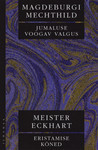
Magdeburgi Mechthildi teos «Jumaluse voogav valgus» on erilisel kohal keskaja müstiliste teoste hulgas: see on ülimalt poeetiline, rahvakeeles kirjutatud, ammutab ainest niihästi kristlike ilmikute kui õukondliku kirjanduse varasalvest ning kujutab endast «võib-olla kõige julgemat erootilist luuleteost, mis keskajast meieni on jõudnud» (Wolfgang Mohr).
Magdeburgi Mechthildi on mõjutanud suurimaks Saksa müstikuks peetav Meister Eckhart, kes kuulub samahästi ka filosoofia ja teoloogia ajalukku. On leitud ka paralleele Meister Eckharti jutluste ning islami müstika ja zen-budismi vahel. Tema «Eristamise kõned» sisaldab Dominiiklaste ordu kloostrivendadele söögilauas peetud ettekandeid ja vastuseid nende küsimustele.






















Meister is German for "Master", referring to the academic title Magister in theologia he obtained in Paris. Coming into prominence during the decadent Avignon Papacy and a time of increased tensions between the Franciscans and Eckhart's Dominican Order of Preacher Friars, he was brought up on charges later in life before the local Franciscan-led Inquisition. Tried as a heretic by Pope John XXII, his "Defence" is famous for his reasoned arguments to all challenged articles of his writing and his refutation of heretical intent. He purportedly died before his verdict was received, although no record of his death or burial site has ever been discovered.
Meister Eckhart is sometimes (erroneously) referred to as "Johannes Eckhart", although Eckhart was his given name and von Hochheim was his surname.
"Perhaps no mystic in the history of Christianity has been more influential and more controversial than the Dominican Meister Eckart. Few, if any, mystics have been as challenging to modern day readers and as resistant to agreed-upon interpretation."
—Bernard McGinn, The Mystical Thought of Meister Eckhart... Show more