"Like his fellow genius, Tolkien, C. S. Lewis has redefined the nature of fantasy, adding richness, beauty, and dimension.... In our times, every fantasy realm must be measured in comparison with Narnia." -Lloyd Alexander.
"Like his fellow genius, Tolkien, C. S. Lewis has redefined the nature of fantasy, adding richness, beauty, and dimension.... In our times, every fantasy realm must be measured in comparison with Narnia." -Lloyd Alexander.
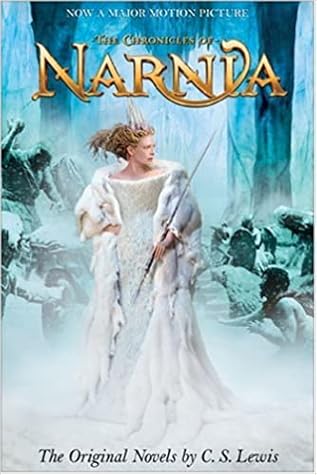
Journeys to the end of the world, fantastic creatures and epic battles between good and evil -- the book that has it all is The Lion, the Witch and the WardrobeThe Lion, the Witch and the Wardrobe, written in 1949 by C. S. Lewis. But Lewis did not stop there. Six more books followed, and together they became known as The Chronicles of NarniaThe Chronicles of Narnia.
For over fifty years, The Chronicles of NarniaThe Chronicles of Narnia have transcended the fantasy genre to become part of the canon of classic literature. Each of the seven books is a masterpiece, drawing the reader into a land where magic meets reality, and the result is a fictional world whose scope has fascinated generations.
This edition presents all seven books - unabridged - in one impressive volume.






















Clive Staples Lewis was born in Ireland, in Belfast on 29 November 1898. His mother was a devout Christian and made efforts to influence his beliefs. When she died in his early youth her influence waned and Lewis was subject to the musings and mutterings of his friends who were decidedly agnostic and atheistic. It would not be until later, in a moment of clear rationality that he first came to a belief in God and later became a Christian.
C. S. Lewis volunteered for the army in 1917 and was wounded in the trenches in World War I. After the war, he attended university at Oxford. Soon, he found himself on the faculty of Magdalen College where he taught Mediaeval and Renaissance English.
Throughout his academic career he wrote clearly on the topic of religion. His most famous works include the Screwtape Letters and the Chronicles of Narnia. The atmosphere at Oxford and Cambridge tended to skepticism. Lewis used this skepticism as a foil. He intelligently saw Christianity as a necessary fact that could be seen clearly in science.
"Surprised by Joy" is Lewis's autobiography chronicling his reluctant conversion from atheism to Christianity in 1931.
... Show more