
Quote by Clement of Alexandria

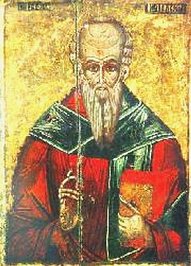
“« Instruisez-vous, ajoute l'apôtre, et exhortez-vous les uns les autres par des psaumes, des hymnes et des cantiques spirituels, chantant de cœur, avec édification, les louanges de Dieu. Quelque chose que vous fassiez, soit en parlant ou en agissant, faites tout au nom du Seigneur Jésus-Christ, rendant grâces par lui à Dieu le père. » Tels doivent être nos festins, pleins de grâces et d'une joie sainte. Si vous savez jouer du luth ou de la harpe, vous le pourrez faire sans mériter de reproche; car vous imiterez ainsi ce saint roi des Hébreux, si agréable et si cher à Dieu.”
topics: instruments
Be the first to react on this!



品牌集团


















© 2025 Bibleportal.com 版权所有.
His parents were pagans, and Clement was a convert to Christianity. In the Protrepticus he displays an extensive knowledge of Greek mythology and mystery religions, which could only have arisen from the practise of his family's religion.
Having rejected paganism as a young man due to its perceived moral corruption, he travelled in Greece, Asia Minor, Palestine and Egypt. Clement's journeys were primarily a religious undertaking. In Greece, he encountered an Ionian theologian, who has been identified as Athenagoras of Athens; while in the east, he was taught by an Assyrian, sometimes identified with Tatian, and a Jew, who was possibly Theophilus of Caesarea.
In around 180, Clement reached Alexandria, where he met Pantaenus, who taught at the Catechetical School of Alexandria. Eusebius suggests that Pantaenus was the head of the school, but it is controversial whether the institutions of the school were formalized in this way before the time of Origen. Proponents of a formalized leadership and succession suggest that Clement succeeded Pantaenus as leader of the school, and was succeeded himself by Origen. Clement studied under Pantaenus, and was ordained to the priesthood by Pope Julian before 189. Otherwise, virtually nothing is known of Clement's life in Alexandria. He may have been married, a conjecture supported by his writings. Clement's diet is also unknown, but he said some things that look down upon eating flesh such as, "It is good...neither to eat flesh" and that even the fumes from cooked flesh "darken the soul"; however he said non-vegetarians aren't sinning except in certain circumstances such as those who eat flesh with "gluttony" and he was not opposed to all instances of eating meat.
During the Severian persecutions of 202–203, Clement left Alexandria. In 211, Alexander of Jerusalem wrote a letter commending him to the Church of Antioch, which may imply that Clement was living in in Cappadocia at that time. The date and location of his death are unknown.