
Quote by G.K. Chesterton

“Now, the ladies being together under these circumstances, it was extremely natural that the discourse should turn upon the propensity of mankind to tyrannize over the weaker sex, and the duty that developed upon the weaker sex to resist that tyranny and assert their rights and dignity. It was natural for four reasons: firstly, because Mrs Quilp being a young woman and notoriously under the dominion of her husband ought to be excited to rebel; secondly, because Mrs Quilp’s parent was known to be laudably shrewish in her disposition and inclined to resist male authority; thirdly, because each visitor wished to show for herself how superior she was in this respect to the generality of her sex; and fourthly, because the company being accustomed to scandalise each other in pairs, were deprived of their usual subject of conversation now that they were all assembled in close friendship, and had consequently no better employment than to attack the common enemy.”
Be the first to react on this!



Group of Brands


















© 2025 Bibleportal.com All rights reserved.
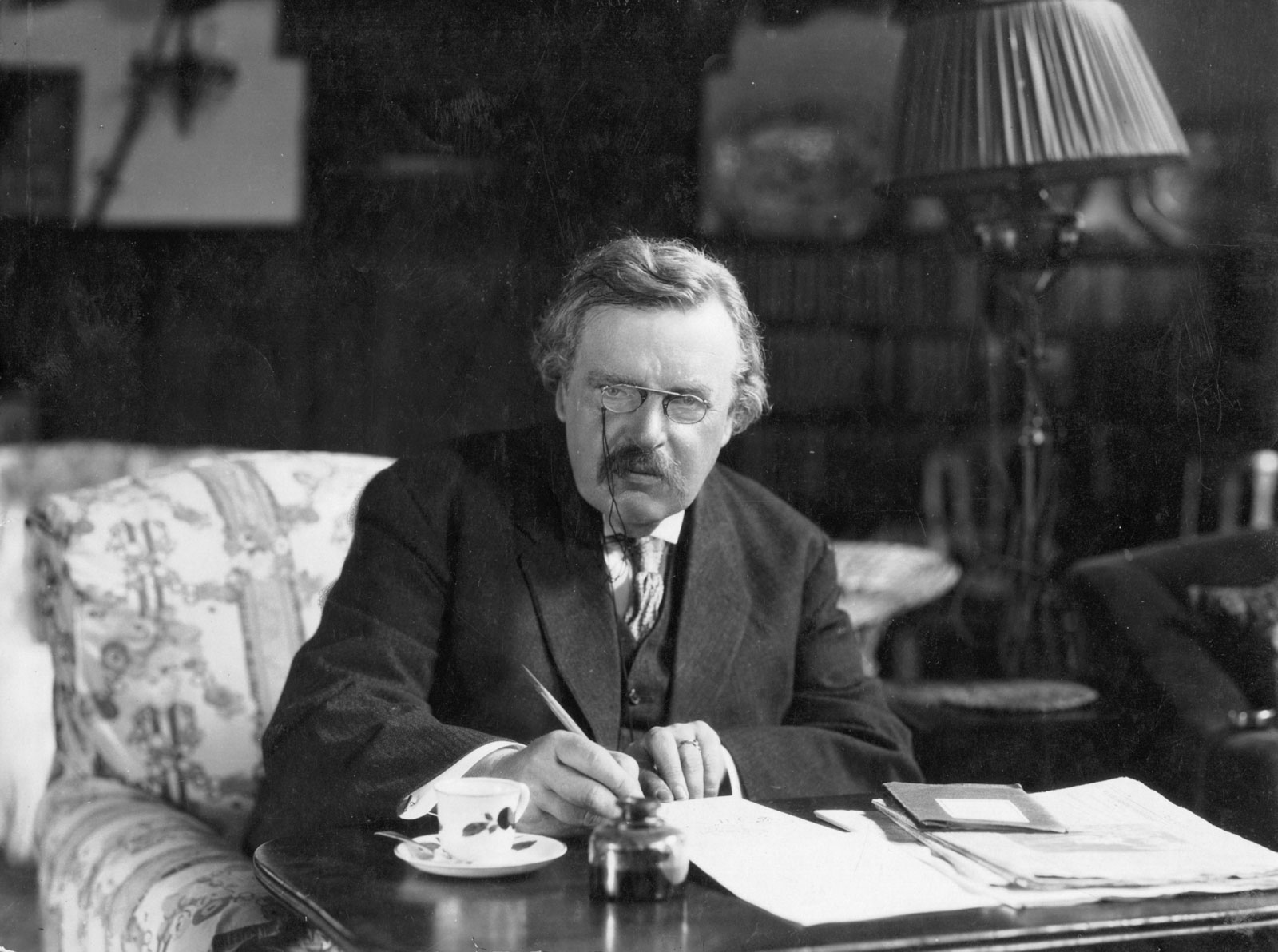
Gilbert Keith Chesterton was one of the most influential English writers of the 20th century. His prolific and diverse output included journalism, philosophy, poetry, biography, Christian apologetics, fantasy and detective fiction.
Chesterton has been called the "prince of paradox". Time magazine, in a review of a biography of Chesterton, observed of his writing style: "Whenever possible Chesterton made his points with popular sayings, proverbs, allegories—first carefully turning them inside out.