Charles Kingsley (1819-1875) served as a Broad Church priest of the Church of England, frequently preaching before England's Queen Victoria and the Prince of Wales. Kingsley is well-known as a prolific writer of both religious and secular works. This volume contains a library of forty-three of his many written sermons, organized in the sequence of their scripture passage references from Psalm 130 through Malachi. Reading his sermons not only gives one a window into the mind of this master of the theological arts, but also into the culture of nineteenth-century Victorian England, the circumstances of the times, and the position of the church in response to those circumstances.

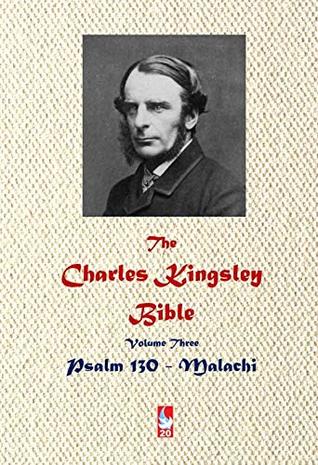





















As a young man, Kingsley was influenced by The Kingdom of Christ (1838) by Frederick Denison Maurice. Originally intended for the legal profession, he changed his mind and chose to pursue a ministry in the church.
In 1850 Kingsley novel Alton Locke was published. The book attempted to expose the social injustice suffered by agricultural labourers and workers in the clothing trade. In Alton Locke Kingsley also describes the Chartist campaign that he was involved with in the 1840s.
Kingsley's life was written by his widow in 1877, entitled Charles Kingsley, his Letters and Memories of his Life, and presents a very touching and beautiful picture of her husband, but perhaps hardly does justice to his humour, his wit, his overflowing vitality and boyish fun.
Charles Kingsley was born in Holne (Devon), the son of a vicar. His brother, Henry Kingsley, also became a novelist. He spent his childhood in Clovelly, Devon and was educated at Magdalene College, Cambridge, before choosing to pursue a ministry in the church. From 1844, he was rector of Eversley in Hampshire, and in 1860, he was appointed Regius Professor of Modern History at the University of Cambridge.
Kingsley's interest in history spilled over into his writings, which include The Heroes (1856), a children's book about Greek mythology, and several historical novels, of which the best known are Hypatia (1853), Hereward the Wake (1865), and Westward Ho! (1855).
In 1872 Kingsley accepted the Presidency of the Birmingham and Midland Institute and became its 19th President.
Kingsley died in 1875 and was buried in St Mary's Churchyard in Eversley.
... Show more