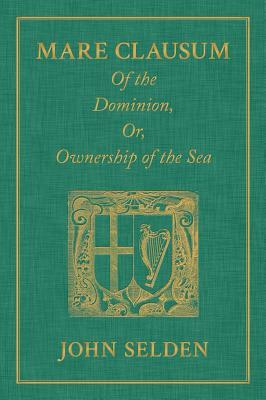
Originally published: London: William Du-Gard, 1652. [xlvi], 500, [10], 37 pp. Reprint of the first edition in English. Mare Clausum (Dominion of the Sea) is the most famous British reply to the argument of Grotius's Mare Liberum, which denied the validity of England's claim to the high seas south and east of England. John Selden [1584-1654] argued that England's jurisdiction extends, in fact, to all waters surrounding the isles. His use of common-law principles to rebut Grotius's philosophical argument is quite impressive. Holdsworth notes that his case was enriched by "a vast historical knowledge, replete with references to the customs of peoples from the times of the Greeks to his time." Holdsworth, A History of English Law V: 10-11.






















John Selden was an English jurist, scholar of England's ancient laws and constitution and scholar of Jewish law. He was known as a polymath showing true intellectual depth and breadth; John Milton hailed Selden in 1644 as "the chief of learned men reputed in this land."
He joined in the protestation of the Commons for the maintenance of the Protestant religion according to the doctrines of the Church of England, the authority of the crown, and the liberty of the subject.
Selden arrived at an Erastian position in church politics. He also believed in free will, which was inconsistent with Calvinism.
... Show more