
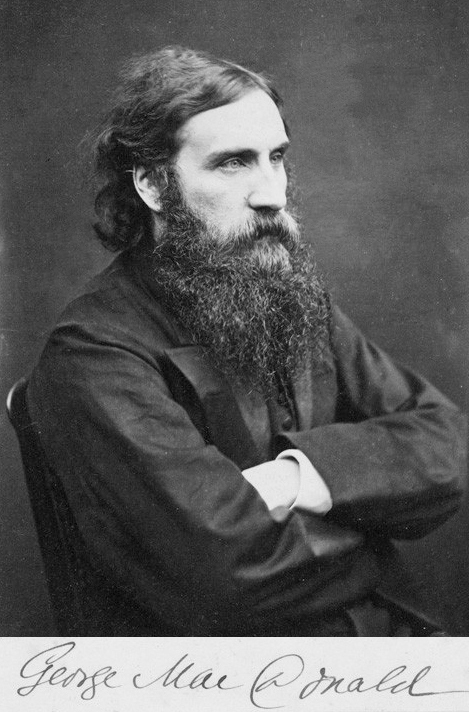
Quote by George MacDonald

“Chorus for a Cat I will never subject be, I am free. Try to curb me and, no doubt, You'll find out Just exactly what a claw Is for! Or I'll dematerialize Before your eyes: Ere you lay a finger on Me, I'm gone! You may think I'm in the lane; Think again! You may guess I'm on the roof; Any proof? I am not to hold or bind, Or find. I will hunt and sing and fight In the night. All day long I lie and doze, Comatose: Never answer when you call And bawl. If to order me you choose, You will lose. Try to understand my mind And you'll find Truest friendship I will give While I live; Kindly amiability, And sympathy. If subservience you prefer, Buy a cur!”
topics: cats
Be the first to react on this!



Group of Brands


















© 2025 Bibleportal.com All rights reserved.
George MacDonald was a Scottish author, poet, and Christian minister.
Known particularly for his poignant fairy tales and fantasy novels, George MacDonald inspired many authors, such as W. H. Auden, J. R. R. Tolkien, C. S. Lewis, E. Nesbit and Madeleine L'Engle. G. K. Chesterton cited The Princess and the Goblin as a book that had "made a difference to my whole existence."
Even Mark Twain, who initially disliked MacDonald, became friends with him, and there is some evidence that Twain was influenced by MacDonald.
MacDonald grew up influenced by his Congregational Church, with an atmosphere of Calvinism. But MacDonald never felt comfortable with some aspects of Calvinist doctrine; indeed, legend has it that when the doctrine of predestination was first explained to him, he burst into tears (although assured that he was one of the elect). Later novels, such as Robert Falconer and Lilith, show a distaste for the idea that God's electing love is limited to some and denied to others.