
Quote by George MacDonald

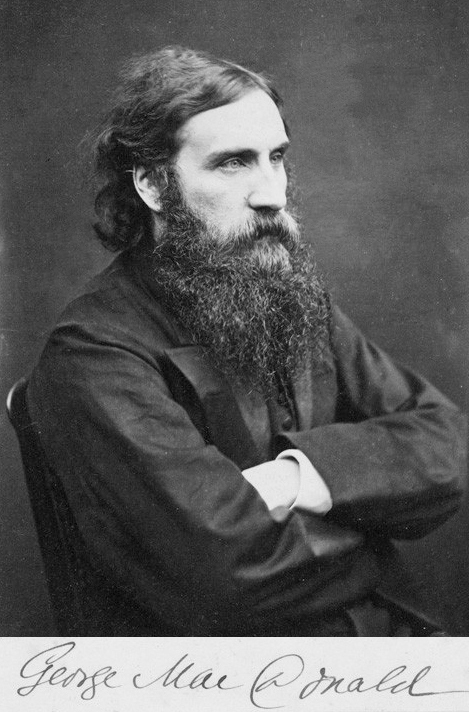
“He had the fault of thinking too well of himself--which who has not who thinks of himself at all, apart from his relation to the holy force of life, within yet beyond him? It was the almost unconscious, assuredly the undetected, self-approbation of the ordinarily righteous man, the defect of whose righteousness makes him regard himself as upright, but the virtue of whose uprightness will at length disclose to his astonished view how immeasurably short of rectitude he comes. At the age of thirty, Godfrey Wardour had not yet become so displeased with himself as to turn self-roused energy upon betterment; and until then all growth must be of doubtful result. … His friends notwithstanding gave him credit for great imperturbability; but in such willfully undemonstrative men the evil burrows the more insidiously that it is masked by a constrained exterior.”
― George MacDonald ,
from Mary Marston
Be the first to react on this!



Group of Brands


















© 2025 Bibleportal.com All rights reserved.
George MacDonald was a Scottish author, poet, and Christian minister.
Known particularly for his poignant fairy tales and fantasy novels, George MacDonald inspired many authors, such as W. H. Auden, J. R. R. Tolkien, C. S. Lewis, E. Nesbit and Madeleine L'Engle. G. K. Chesterton cited The Princess and the Goblin as a book that had "made a difference to my whole existence."
Even Mark Twain, who initially disliked MacDonald, became friends with him, and there is some evidence that Twain was influenced by MacDonald.
MacDonald grew up influenced by his Congregational Church, with an atmosphere of Calvinism. But MacDonald never felt comfortable with some aspects of Calvinist doctrine; indeed, legend has it that when the doctrine of predestination was first explained to him, he burst into tears (although assured that he was one of the elect). Later novels, such as Robert Falconer and Lilith, show a distaste for the idea that God's electing love is limited to some and denied to others.