
Quote by Frederick W. Faber

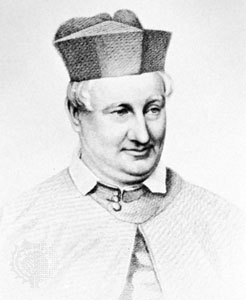
“It is an easy way. It is the way which Jesus Christ Himself trod in coming to us, and in which there is no obstacle in reaching Him. It is true that we can attain divine union by other roads; but it is by many more crosses and strange deaths, and with many more difficulties, which we shall find it hard to overcome. We must pass through obscure nights, through combats, through strange agonies, over craggy mountains, through cruel thorns and over frightful deserts. But by the path of Mary we pass more gently and more tranquilly.”
Be the first to react on this!



Group of Brands


















© 2025 Bibleportal.com All rights reserved.
Frederick William Faber, British hymn writer and theologian, was born at Calverley, Yorkshire, where his grandfather, Thomas Faber, was vicar.
In January 1837, he was elected fellow of National Scholars Foundation. Meanwhile, he had given up the Calvinistic views of his youth, and had become an enthusiastic follower of John Henry Newman.
He accepted the rectory of Elton in Huntingdonshire, but soon after went again to the continent, in order to study the methods of the Roman Catholic Church. After a prolonged mental struggle, he joined the Catholic Church in November 1845.
Faber published a number of prose works, and three volumes of hymns, among the most well known is Faith of Our Fathers.