
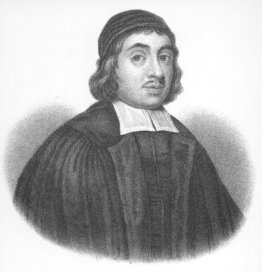
Quote by Thomas Watson

“Los que se deleitan en la piedad están a menudo hablando de ella.; “Entonces los que temían a Jehová hablaron cada uno a otro,” Mal. 3.16. Donde se infunde la gracia, será efusiva. “Las palabras de la boca del sabio están llenas de gracia,” Ecle. 12.10. David deleitándose con los testimonios de Dios, “hablaría de ellos delante de los reyes”, Salmo 119.46. El cónyuge deleitándose con su amado, no pudo ocultar su amor, sino que prorrumpe en más conmovedoras, y no menos elegantes expresiones: “Mi amado es blanco y rubio, señalado entre diez mil, la cabeza es como la más fina de oro” etcétera. Los discípulos cuyos corazones estaban en Cristo, le hacen el tema de su discurso hacen mientras que iban a Emaús, Lucas 24.19. Los cristianos primitivos que fueron encendidos con el amor a Dios, hablaban mucho de los cielos, y el reino preparado, tanto que el emperador sospechaba que pretendían quitarle su reino! Las palabras son el espejo de la mente-que muestran lo que está en el corazón! Donde hay deleite espiritual, al igual que el vino nuevo, tendrá ventilación.”
Be the first to react on this!



Group of Brands


















© 2025 Bibleportal.com All rights reserved.
He was educated at Emmanuel College, Cambridge, where he was noted for remarkably intense study. In 1646 he commenced a sixteen year pastorate at St. Stephen's, Walbrook. He showed strong Presbyterian views during the civil war, with, however, an attachment to the king, and in 1651 he was imprisoned briefly with some other ministers for his share in Christopher Love's plot to recall Charles II of England.
He was released on 30 June 1652, and was formally reinstated as vicar of St. Stephen's Walbrook. He obtained great fame and popularity as a preacher until the Restoration, when he was ejected for nonconformity. Not withstanding the rigor of the acts against dissenters, Watson continued to exercise his ministry privately as he found opportunity. Upon the Declaration of Indulgence in 1672 he obtained a license to preach at the great hall in Crosby House. After preaching there for several years, his health gave way, and he retired to Barnston, Essex, where he died suddenly while praying in secret. He was buried on 28 July 1686.
Thomas Watson was an English, non-conformist, Puritan preacher and author.
He was educated at Emmanuel College, Cambridge, where he was noted for remarkably intense study. In 1646 he commenced a sixteen year pastorate at St. Stephen's, Walbrook. He showed strong Presbyterian views during the civil war, with, however, an attachment to the king, and in 1651 he was imprisoned briefly with some other ministers for his share in Christopher Love's plot to recall Charles II of England.
He was released on 30 June 1652, and was formally reinstated as vicar of St. Stephen's Walbrook. He obtained great fame and popularity as a preacher until the Restoration, when he was ejected for nonconformity. Not withstanding the rigor of the acts against dissenters, Watson continued to exercise his ministry privately as he found opportunity. Upon the Declaration of Indulgence in 1672 he obtained a license to preach at the great hall in Crosby House. After preaching there for several years, his health gave way, and he retired to Barnston, Essex, where he died suddenly while praying in secret. He was buried on 28 July 1686.