
Quote by Harriet Beecher Stowe

“Mr. Watson inquired who saw the assault committed. Master Hugh told him it was done in Mr. Gardner's ship-yard at midday, where there were a large company of men at work. "As to that," he said, "the deed was done, and there was no question as to who did it." His answer was, he could do nothing in the case, unless some white man would come forward and testify. He could issue no warrant on my word. If I had been killed in the presence of a thousand colored people, their testimony combined would have been insufficient to have arrested one of the murderers. Master Hugh, for once, was compelled to say this state of things was too bad. Of course, it was impossible to get any white man to volunteer his testimony in my behalf, and against the white young men. Even those who may have sympathized with me were not prepared to do this. It required a degree of courage unknown to them to do so; for just at that time, the slightest manifestation of humanity toward a colored person was denounced as abolitionism, and that name subjected its bearer to frightful liabilities. The watchwords of the bloody-minded in that region, and in those days, were, "Damn the abolitionists!" and "Damn the n****rs!" There was nothing done, and probably nothing would have been done if I had been killed.”
Be the first to react on this!



Group of Brands


















© 2025 Bibleportal.com All rights reserved.
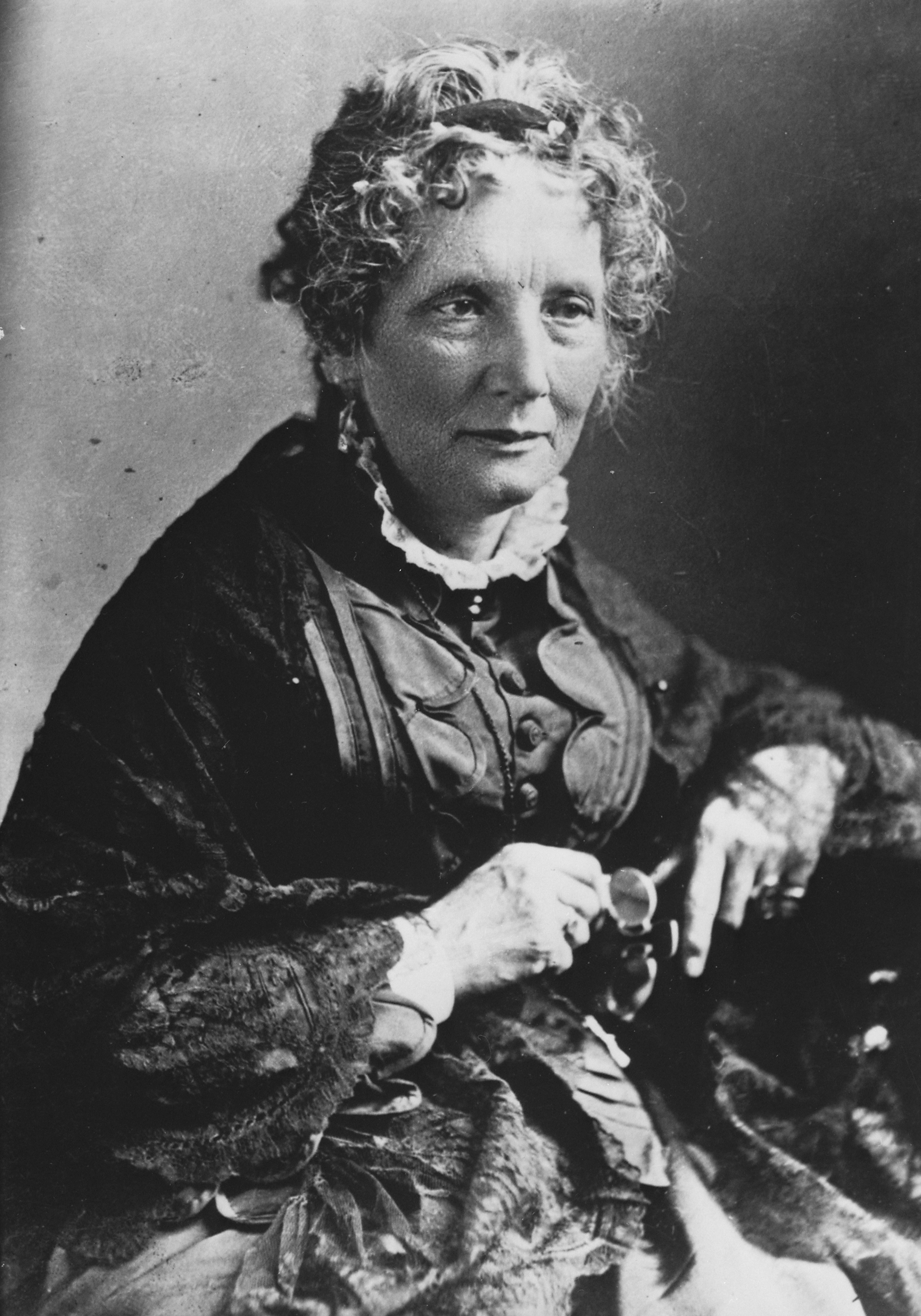
1811-1896
Harriet Beecher Stowe was an American abolitionist and author. Harriet was born in Litchfield, Connecticut, as the daughter of an outspoken religious leader Lyman Beecher. She was the sister of the educator and author, Catherine Beecher, clergymen Henry Ward Beecher and Charles Beecher.
Her father was a preacher who was greatly effected by the pro-slavery riots that took place in Cincinnati in 1834.
Stowe's novel Uncle Tom's Cabin (1852) depicted life for African-Americans under slavery; it reached millions as a novel and play, and became influential in the U.S. and Britain and made the political issues of the 1850s regarding slavery tangible to millions, energizing anti-slavery forces in the American North, while provoking widespread anger in the South. Upon meeting Stowe, Abraham Lincoln allegedly remarked, "So this is the little old lady who started this new great war!"