
Quote by John Newton

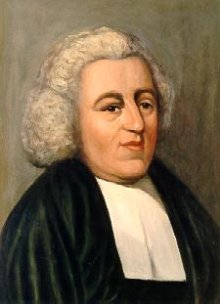
“My goodness was like 'the morning-dew that passeth away'; and, loving sin and disrelishing religious duties as much as ever, I returned, as 'the sow that is washed, to her wallowing in the mire'. With little variation, this was my course of life for nine years: but in that time I had such experience of my own weakness, and the superior force of temptation, that I secretly concluded reformation in my case to be impracticable. 'Can the Ethiopian change his skin, or the leopard his spots?' I was experimentally convicted that I was equally unable, with the feeble barrier of resolutions and endeavours, to stem the torrent of impetuous inclinations, when swelled by welcome, suitable and powerful temptations; and being ignorant that God had reserved this to himself as his own work, and had engaged to do it for the poor sinner, who, feeling his own insufficiency, is heartily desirous to have it done by him, I stifled my convictions as well as I could, and put off my repentance to a more convenient season.”
Be the first to react on this!



Group of Brands


















© 2025 Bibleportal.com All rights reserved.
He was a strong support of the Evangelicals in the Church of England, and was a friend of the dissenting clergy as well as of the ministry of his own church.
He was the author of many hymns, including "Amazing Grace".
John Henry Newton was an English Anglican clergyman and former slave-ship captain. He was the author of many hymns, including "Amazing Grace".
Sailing back to England in 1748 aboard the merchant ship, he experienced a spiritual conversion in the Greyhound, which was hauling a load of beeswax and dyer's wood. The ship encountered a severe storm off the coast of Donegal and almost sank. Newton awoke in the middle of the night and finally called out to God as the ship filled with water. It was this experience which he later marked as the beginnings of his conversion to evangelical Christianity. As the ship sailed home, Newton began to read the Bible and other religious literature. By the time he reached Britain, he had accepted the doctrines of Evangelical Christianity.
He became well-known as an evangelical lay minister, and applied for the Anglican priesthood in 1757, although it was more than seven years before he was eventually accepted and ordained into the Church of England.
Newton joined English abolitionist William Wilberforce, leader of the Parliamentary campaign to abolish the slave trade, and lived to see the passage of the Slave Trade Act 1807.