
Quote by John Newton

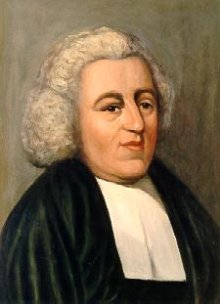
“The other day I was at Depford, and saw a ship launched—she slipped easily into the water; the people on board shouted; the ship looked clean and gay, she was freshly painted, and her colours flying. But I looked at her with a sort of pity, “Poor ship!” I thought, “you are now in port and in safety; but ere long you must go to sea. Who can tell what storms you may meet with hereafter, and to what hazards you may be exposed; how weather-beaten you may be before you return to port again, or whether you may return at all!” Then my thoughts turned from the ship to my child. It seemed an emblem of your present state; you are now, as it were, in a safe harbour; but by and by you must launch out into the world, which may well be compared to a tempestuous sea. I could even now almost weep at the resemblance. But I take courage; my hopes are greater than my fears. I know there is an infallible Pilot, who has the winds and the waves at his command. There is hardly a day passes, in which I do not entreat him to take charge of you. Under his care I know you will be safe. He can guide you, unhurt, amidst the storms, and rocks, and dangers, by which you might otherwise suffer; and bring you, at last, to the haven of eternal rest!”
Be the first to react on this!



Group of Brands


















© 2025 Bibleportal.com All rights reserved.
He was a strong support of the Evangelicals in the Church of England, and was a friend of the dissenting clergy as well as of the ministry of his own church.
He was the author of many hymns, including "Amazing Grace".
John Henry Newton was an English Anglican clergyman and former slave-ship captain. He was the author of many hymns, including "Amazing Grace".
Sailing back to England in 1748 aboard the merchant ship, he experienced a spiritual conversion in the Greyhound, which was hauling a load of beeswax and dyer's wood. The ship encountered a severe storm off the coast of Donegal and almost sank. Newton awoke in the middle of the night and finally called out to God as the ship filled with water. It was this experience which he later marked as the beginnings of his conversion to evangelical Christianity. As the ship sailed home, Newton began to read the Bible and other religious literature. By the time he reached Britain, he had accepted the doctrines of Evangelical Christianity.
He became well-known as an evangelical lay minister, and applied for the Anglican priesthood in 1757, although it was more than seven years before he was eventually accepted and ordained into the Church of England.
Newton joined English abolitionist William Wilberforce, leader of the Parliamentary campaign to abolish the slave trade, and lived to see the passage of the Slave Trade Act 1807.