
Quote by G.K. Chesterton

“Well, hang it all,’ he said, ‘he was only an atheist.’ ‘I’m afraid I don’t know what you mean,’ said the Inspector, politely. ‘He only wanted to abolish God,’ explained Father Brown in a temperate and reasonable tone. ‘He only wanted to destroy the Ten Commandments and root up all the religion and civilization that had made him, and wash out all the common sense of ownership and honesty; and let his culture and his country be flattened out by savages from the ends of the earth. That’s all he wanted. You have no right to accuse him of anything beyond that. Hang it all, everybody draws the line somewhere! And you come here and calmly suggest that a Mandeville Man of the old generation (for Craken was of the old generation, whatever his views) would have begun to smoke, or even strike a match, while he was still drinking the College Port, of the vintage of ’08 — no, no; men are not so utterly without laws and limits as all that! I was there; I saw him; he had not finished his wine, and you ask me why he did not smoke! No such anarchic question has ever shaken the arches of Mandeville College Funny place, Mandeville College. Funny place, Oxford. Funny place, England.’ ‘But you haven’t anything particular to do with Oxford?’ asked the doctor curiously. ‘I have to do with England,’ said Father Brown. ‘I come from there. And the funniest thing of all is that even if you love it and belong to it, you still can’t make head or tail of it.’ The”
― G.K. Chesterton ,
Be the first to react on this!



Group of Brands


















© 2025 Bibleportal.com All rights reserved.
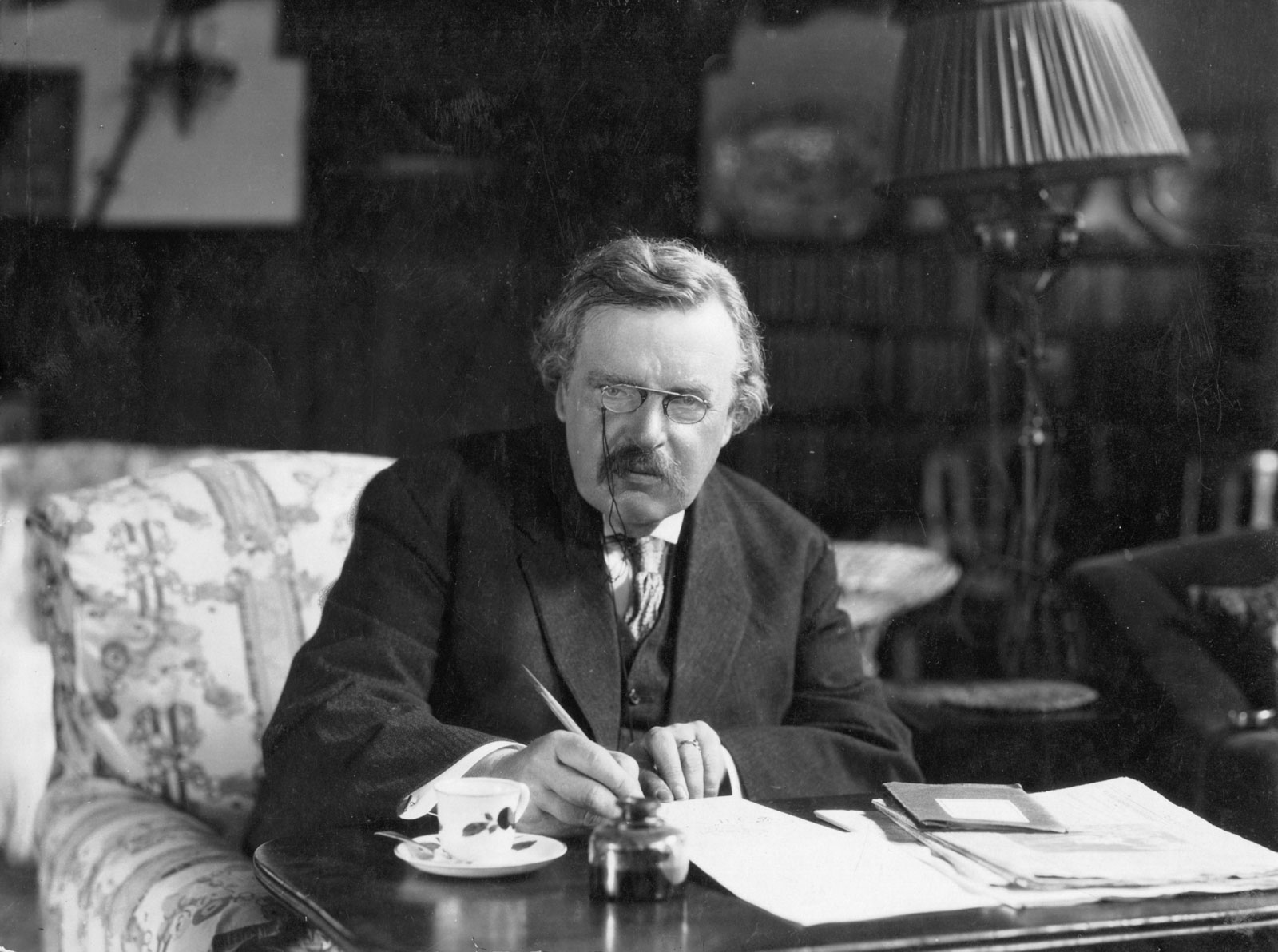
Gilbert Keith Chesterton was one of the most influential English writers of the 20th century. His prolific and diverse output included journalism, philosophy, poetry, biography, Christian apologetics, fantasy and detective fiction.
Chesterton has been called the "prince of paradox". Time magazine, in a review of a biography of Chesterton, observed of his writing style: "Whenever possible Chesterton made his points with popular sayings, proverbs, allegories—first carefully turning them inside out.