
Quote by G.K. Chesterton

“What a curious man you are!’ she said. ‘Why should you disbelieve the history?’ ‘I disbelieve the history because it isn’t history,’ answered Father Brown. ‘To anybody who happens to know a little about the Middle Ages, the whole story was about as probable as Gladstone offering Queen Victoria a cigar. But does anybody know anything about the Middle Ages? Do you know what a Guild was? Have you ever heard of salvo managio suo? Do you know what sort of people were Servi Regis? ‘No, of course I don’t,’ said the lady, rather crossly. ‘What a lot of Latin words!’ ‘No, of course,’ said Father Brown. ‘If it had been Tutankhamen and a set of dried-up Africans preserved, Heaven knows why, at the other end of the world; if it had been Babylonia or China; if it had been some race as remote and mysterious as the Man in the Moon, your newspapers would have told you all about it, down to the last discovery of a tooth-brush or a collar-stud. But the men who built your own parish churches, and gave the names to your own towns and trades, and the very roads you walk on — it has never occurred to you to know anything about them. I don’t claim to know a lot myself; but I know enough to see that story is stuff and nonsense from beginning to end. It was illegal for a money-lender to distrain on a man’s shop and tools. It’s exceedingly unlikely that the Guild would not have saved a man from such utter ruin, especially if he were ruined by a Jew. Those people had vices and tragedies of their own; they sometimes tortured and burned people. But that idea of a man, without God or hope in the world, crawling away to die because nobody cared whether he lived — that isn’t a medieval idea. That’s a product of our economic science and progress. The Jew wouldn’t have been a vassal of the feudal lord. The Jews normally had a special position as servants of the King. Above all, the Jew couldn’t possibly have been burned for his religion.’ ‘The”
― G.K. Chesterton ,
Be the first to react on this!



Group of Brands


















© 2025 Bibleportal.com All rights reserved.
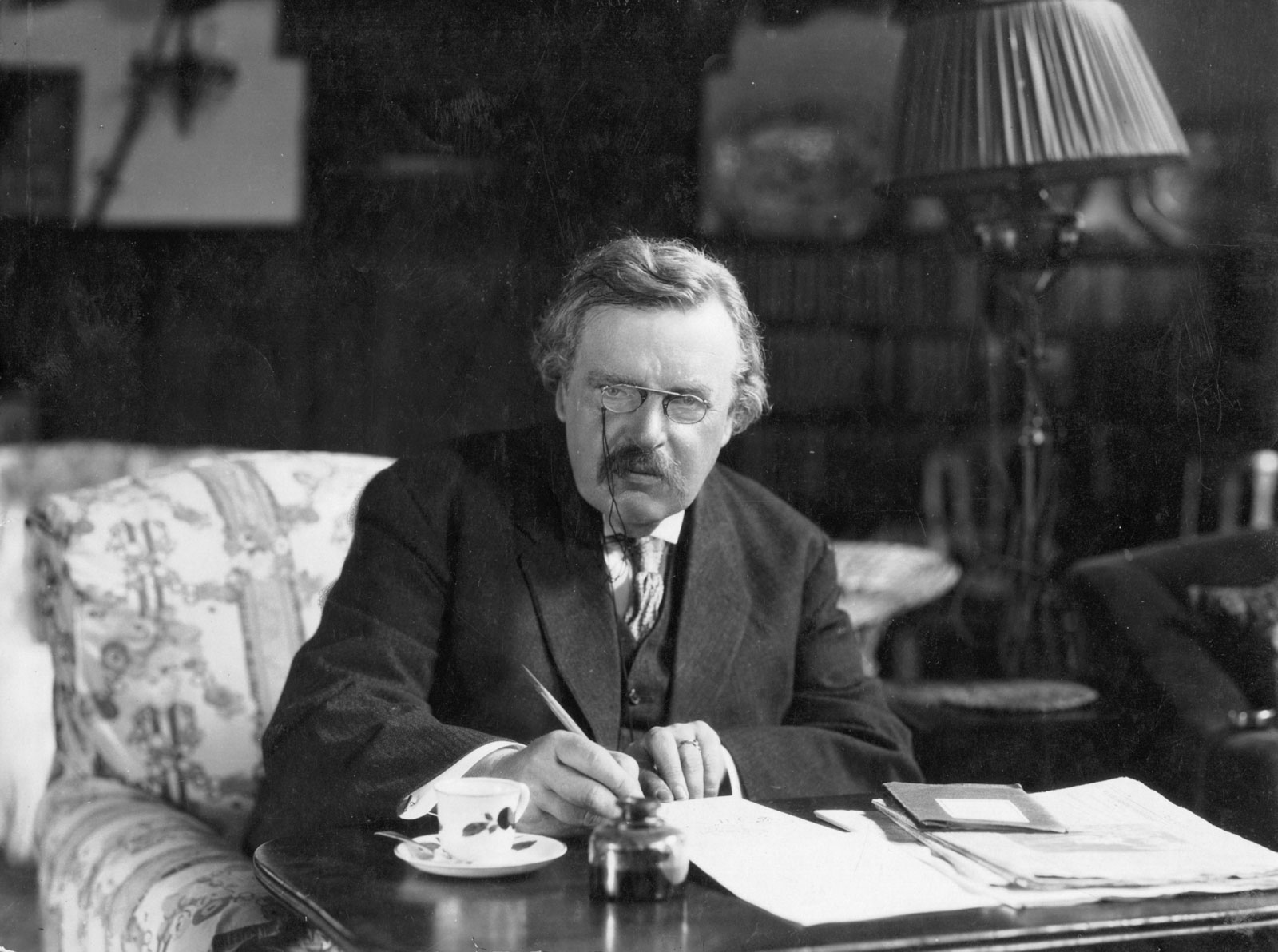
Gilbert Keith Chesterton was one of the most influential English writers of the 20th century. His prolific and diverse output included journalism, philosophy, poetry, biography, Christian apologetics, fantasy and detective fiction.
Chesterton has been called the "prince of paradox". Time magazine, in a review of a biography of Chesterton, observed of his writing style: "Whenever possible Chesterton made his points with popular sayings, proverbs, allegories—first carefully turning them inside out.