Thomas Carlyle (1795 1881) was one of the most influential authors of the nineteenth century. Eagerly studied at the highest level of intellectual society, his satirical essays and perceptive historical biographies caused him to be regarded for much of the Victorian period as a literary genius and eminent social philosopher. After graduating from Edinburgh University in 1814, he published his first scholarly work on German literature in 1824, before finding literary success with his history of the French Revolution in 1837. After falling from favour during the first part of the twentieth century, his work has more recently become the subject of scholarly re-examination. His introduction of German literature and philosophy into the British intellectual milieu profoundly influenced later philosophical ideas and literary studies. These volumes are reproduced from the 1896 Centenary Edition of his collected works. Volume 26 contains the first volume of a collection of critical essays."

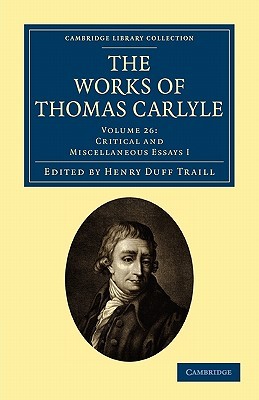





















Thomas Carlyle was a Scottish satirical writer, essayist, historian and teacher during the Victorian era. He called economics "the dismal science", wrote articles for the Edinburgh Encyclopedia, and became a controversial social commentator.
Coming from a strict Calvinist family, Carlyle was expected by his parents to become a preacher, but while at the University of Edinburgh, he lost his Christian faith. Calvinist values, however, remained with him throughout his life. This combination of a religious temperament with loss of faith in traditional Christianity made Carlyle's work appealing to many Victorians who were grappling with scientific and political changes that threatened the traditional social order.
... Show more