
Quote by George MacDonald

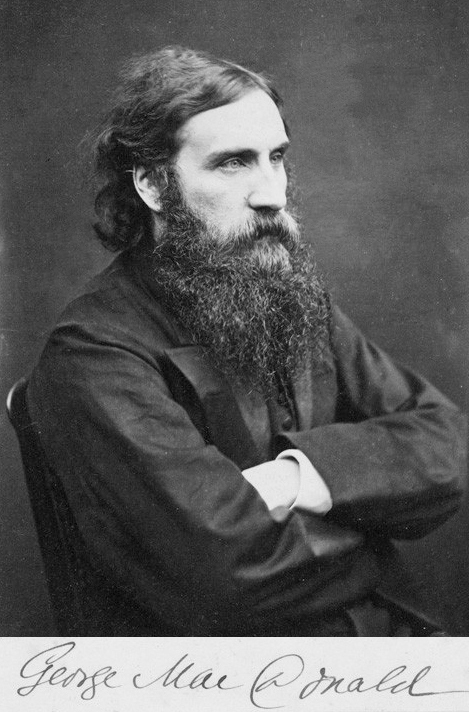
“How could the Revisers choose this last reading, 'an heir through God,' and keep the word adoption? From the passage it is as plain as St. Paul could make it, that, by the word translated adoption, he means the raising of a father's own child from the condition of tutelage and subjection to others, a state which, he says, is no better than that of a slave, to the position and rights of a son. None but a child could become a son; the idea is—a spiritual coming of age; only when the child is a man is he really and fully a son. The thing holds in the earthly relation. How many children of good parents—good children in the main too—never know those parents, never feel towards them as children might, until, grown up, they have left the house—until, perhaps, they are parents themselves, or are parted from them by death! To be a child is not necessarily to be a son or daughter. The childship is the lower condition of the upward process towards the sonship, the soil out of which the true sonship shall grow, the former without which the latter were impossible. God can no more than an earthly parent be content to have only children: he must have sons and daughters—children of his soul, of his spirit, of his love—not merely in the sense that he loves them, or even that they love him, but in the sense that they love like him, love as he loves.”
Be the first to react on this!



Grupo de marcas


















© 2025 Bibleportal.com Reservados todos los derechos.
George MacDonald was a Scottish author, poet, and Christian minister.
Known particularly for his poignant fairy tales and fantasy novels, George MacDonald inspired many authors, such as W. H. Auden, J. R. R. Tolkien, C. S. Lewis, E. Nesbit and Madeleine L'Engle. G. K. Chesterton cited The Princess and the Goblin as a book that had "made a difference to my whole existence."
Even Mark Twain, who initially disliked MacDonald, became friends with him, and there is some evidence that Twain was influenced by MacDonald.
MacDonald grew up influenced by his Congregational Church, with an atmosphere of Calvinism. But MacDonald never felt comfortable with some aspects of Calvinist doctrine; indeed, legend has it that when the doctrine of predestination was first explained to him, he burst into tears (although assured that he was one of the elect). Later novels, such as Robert Falconer and Lilith, show a distaste for the idea that God's electing love is limited to some and denied to others.