
Quote by George MacDonald

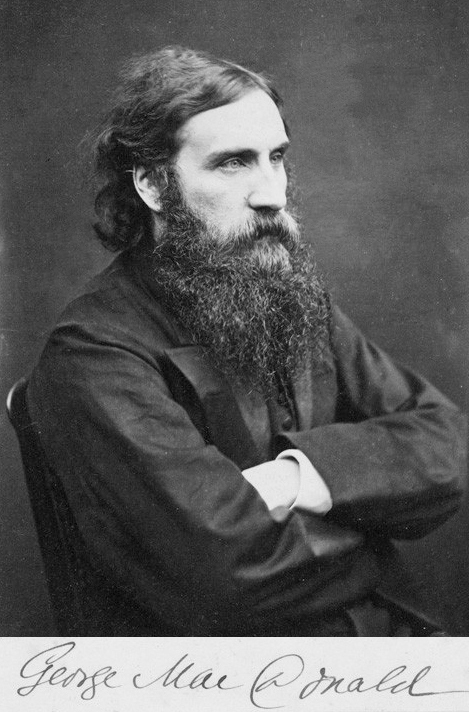
“It avails nothing to answer that we lost our birthright by the fall. I do not care to argue that I did not fall when Adam fell; for I have fallen many a time, and there is a shadow on my soul which I or another may call a curse; I cannot get rid of a something that always intrudes between my heart and the blue of every sky. But it avails nothing, either for my heart or their argument, to say I have fallen and been cast out: can any repudiation, even that of God, undo the facts of an existent origin? Nor is it merely that he made me: by whose power do I go on living? When he cast me out, as you say, did I then begin to draw my being from myself—or from the devil? In whom do I live and move and have my being? It cannot be that I am not the creature of God.”
Be the first to react on this!



Grupo de marcas


















© 2025 Bibleportal.com Reservados todos los derechos.
George MacDonald was a Scottish author, poet, and Christian minister.
Known particularly for his poignant fairy tales and fantasy novels, George MacDonald inspired many authors, such as W. H. Auden, J. R. R. Tolkien, C. S. Lewis, E. Nesbit and Madeleine L'Engle. G. K. Chesterton cited The Princess and the Goblin as a book that had "made a difference to my whole existence."
Even Mark Twain, who initially disliked MacDonald, became friends with him, and there is some evidence that Twain was influenced by MacDonald.
MacDonald grew up influenced by his Congregational Church, with an atmosphere of Calvinism. But MacDonald never felt comfortable with some aspects of Calvinist doctrine; indeed, legend has it that when the doctrine of predestination was first explained to him, he burst into tears (although assured that he was one of the elect). Later novels, such as Robert Falconer and Lilith, show a distaste for the idea that God's electing love is limited to some and denied to others.