
Quote by Benjamin B. Warfield

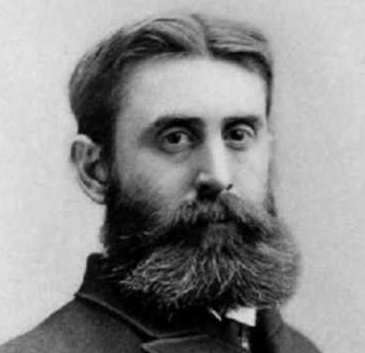
“...Calvinism has a sharply-defined starting-point of its own for the three fundamental relations of all human existence: viz., our relation to God, to man, and to the world. For our relation to God: an immediate fellowship of man with Eternal, independently of priest or church. For the relation of man to man: the recognition in each person of human worth, which is his by virtue of his creation after the Divine likeness, and therefore of the equality of all men before God and his magistrate. And for our relation to the world: the recognition that in the whole world the curse is restrained by grace, that the life of the world is to be honored in its independence, and that we must, in every domain, discover the treasure and develop the potencies hidden by God in nature and in human life.”
Be the first to react on this!



Grupo de Marcas


















© 2025 Bibleportal.com Todos os direitos reservados.
Benjamin Breckinridge Warfield was professor of theology at Princeton Seminary from 1887 to 1921. Some conservative Presbyterians consider him to be the last of the great Princeton theologians before the split in 1929 that formed Westminster Seminary and the Orthodox Presbyterian Church.
Warfield entered Princeton University in 1868 and graduated in 1871 with high honors. Although Warfield studied mathematics and science in college, while traveling in Europe he decided to study theology, surprising even many of his closest friends. He entered Princeton Seminary in 1873, in order to train for ministry as a Presbyterian minister. He graduated in 1876. For a short time in 1876 he preached in Presbyterian churches in Concord, Kentucky and Dayton, Ohio as a "supply pastor". In late 1876 Warfield and his new wife moved to Germany where he studied under Ernst Luthardt and Franz Delitzsch. Warfield was the assistant pastor of First Presbyterian Church in Baltimore, Maryland for a short time. Then he became an instructor at Western Theological Seminary, which is now called Pittsburgh Theological Seminary. He was ordained on April 26, 1879.
During his tenure, his primary thrust (and that of the seminary) was an authoritative view of the Bible. This view was held in contrast to the emotionalism of the revival movements, the rationalism of higher criticism, and the heterodox teachings of various New religious movements that were emerging. The seminary held fast to the Reformed confessional tradition — that is, it faithfully followed the Westminster Confession of Faith.
Warfield's view of evolution may appear unusual for a conservative of his day. He was willing to accept that Darwin's theory might be true, but believed that God guided the process of evolution, and was as such an evolutionary creationist.