
Quote by George MacDonald

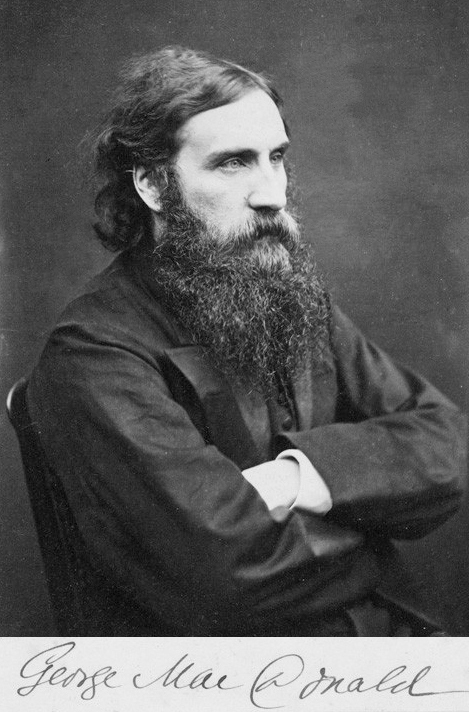
“I would never speak about faith, but speak about the Lord himself - not theologically, as to the why and wherefore of his death - but as he showed himself in his life on earth, full of grace, love, beauty, tenderness and truth. Then the needy heart cannot help hoping and trusting in him, and having faith, without ever thinking about faith. How a human heart with human feelings and necessities is ever to put confidence in the theological phantom which is commonly called Christ in our pulpits, I do not know. It is commonly a miserable representation of him who spent thirty-three years on our Earth, living himself into the hearts and souls of men, and thus manifesting God to them.”
topics: spiritual
Be the first to react on this!



Grupo de Marcas


















© 2025 Bibleportal.com Todos os direitos reservados.
George MacDonald was a Scottish author, poet, and Christian minister.
Known particularly for his poignant fairy tales and fantasy novels, George MacDonald inspired many authors, such as W. H. Auden, J. R. R. Tolkien, C. S. Lewis, E. Nesbit and Madeleine L'Engle. G. K. Chesterton cited The Princess and the Goblin as a book that had "made a difference to my whole existence."
Even Mark Twain, who initially disliked MacDonald, became friends with him, and there is some evidence that Twain was influenced by MacDonald.
MacDonald grew up influenced by his Congregational Church, with an atmosphere of Calvinism. But MacDonald never felt comfortable with some aspects of Calvinist doctrine; indeed, legend has it that when the doctrine of predestination was first explained to him, he burst into tears (although assured that he was one of the elect). Later novels, such as Robert Falconer and Lilith, show a distaste for the idea that God's electing love is limited to some and denied to others.