
Quote by Harriet Beecher Stowe

“Superficially, the figure in the smoking-room was that of a long, weedy young man - hairless as to his face; scalped with a fine lank fleece of neutral tint; pale-eyed, and slave to a bored and languid expression, over which he had little control, though it frequently misrepresented his mood. He was dressed scrupulously, though not obtrusively, in the mode, and was smoking a pungent cigarette with an air that seemed balanced between a genuine effort at self-abstraction and a fear of giving offence by a too pronounced show of it. In this state, flying bubbles of conversation broke upon him as he sat a little apart and alone. ("The Accursed Cordonnier")”
Be the first to react on this!



Grupo de Marcas


















© 2025 Bibleportal.com Todos os direitos reservados.
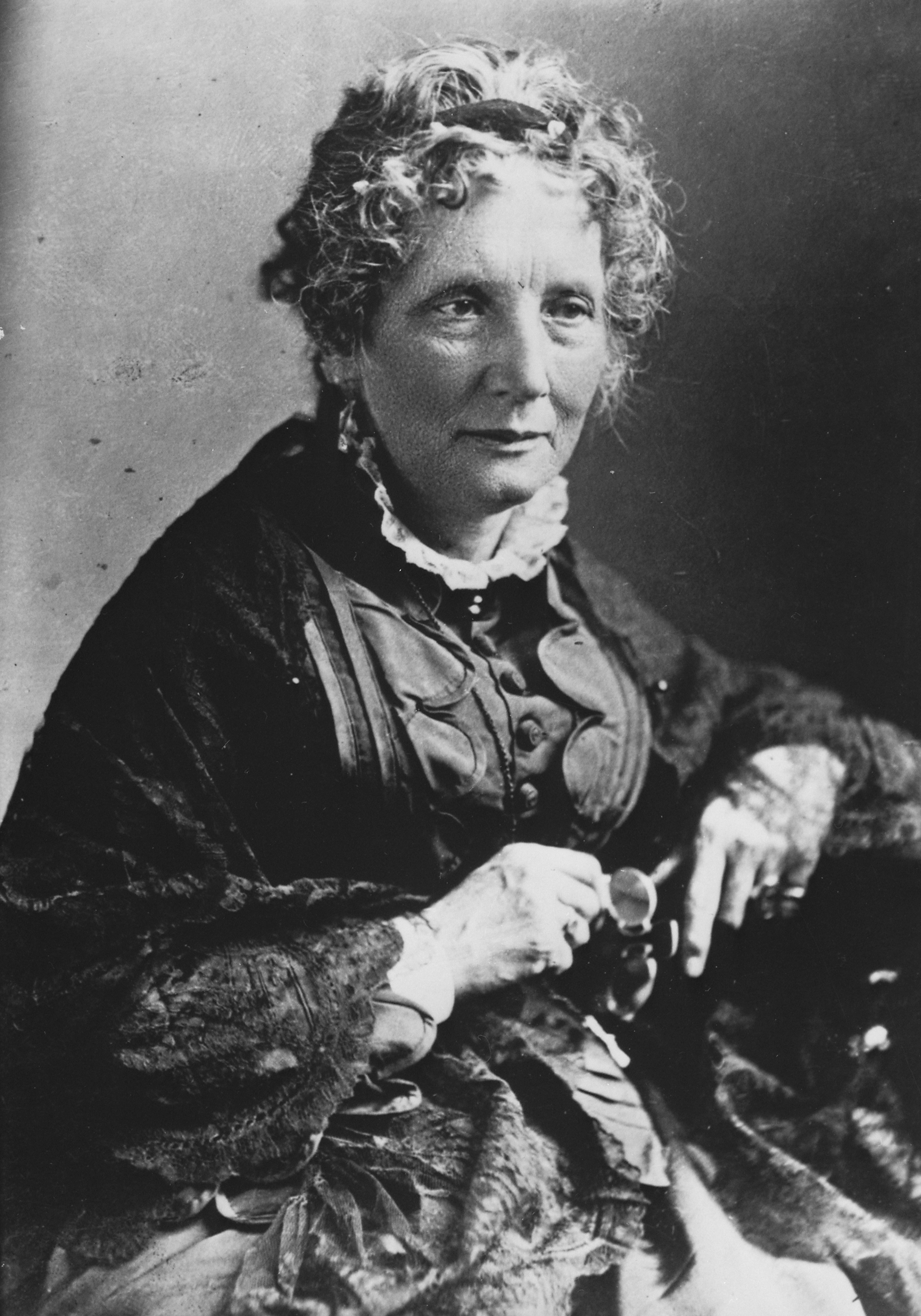
1811-1896
Harriet Beecher Stowe was an American abolitionist and author. Harriet was born in Litchfield, Connecticut, as the daughter of an outspoken religious leader Lyman Beecher. She was the sister of the educator and author, Catherine Beecher, clergymen Henry Ward Beecher and Charles Beecher.
Her father was a preacher who was greatly effected by the pro-slavery riots that took place in Cincinnati in 1834.
Stowe's novel Uncle Tom's Cabin (1852) depicted life for African-Americans under slavery; it reached millions as a novel and play, and became influential in the U.S. and Britain and made the political issues of the 1850s regarding slavery tangible to millions, energizing anti-slavery forces in the American North, while provoking widespread anger in the South. Upon meeting Stowe, Abraham Lincoln allegedly remarked, "So this is the little old lady who started this new great war!"