
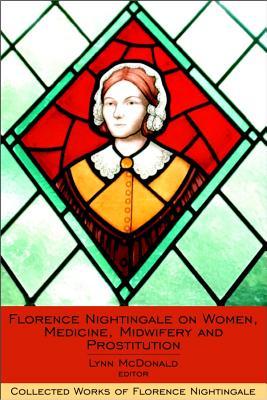
Florence Nightingale on Women, Medicine, Midwifery and Prostitution
by Florence Nightingale
Volume 8: Florence Nightingale on Women, Medicine, Midwifery and ProstitutionVolume 8: Florence Nightingale on Women, Medicine, Midwifery and Prostitution makes available a great range of Florence Nightingale's work on women: her pioneering study of maternal mortality in childbirth (Introductory Notes on Lying-in InstitutionsIntroductory Notes on Lying-in Institutions), her opposition to the regulation of prostitution through the Contagious Diseases Acts (attempts to stop the legislation and otherwise to facilitate the voluntary treatment of syphilitic prostitutes), her views on gender roles, marriage and measures for income security for women and excerpts from her draft (abandoned) novel. There is correspondence with women friends and colleagues from childhood to old age, on a vast range of subjects. Correspondents include old family friends, royal and notable personages, nuns and colleagues in various causes. Most of this material has not been published before and some letters wil be new even to Nightingale scholars. Altogether a very different view of Nightingale emerges from what normally appears in biographies and other secondary sources. This material will enable a new assessment of her feminism, her relations with women and her contribution to improving the status of women of her time.
Currently, Volumes 1 to 11 are available in e-book version by subscription or from university and college libraries through the following vendors: Canadian Electronic Library, Ebrary, MyiLibrary, and Netlibrary.
Currently, Volumes 1 to 11 are available in e-book version by subscription or from university and college libraries through the following vendors: Canadian Electronic Library, Ebrary, MyiLibrary, and Netlibrary.
BUY NOW
Hardcover, 1101 pages
Published September 29th 2005 by Wilfrid Laurier University Press



品牌集团


















© 2025 Bibleportal.com 版权所有.
1820-1910
Florence Nightingale who came to be known as "The Lady with the Lamp", was a pioneering English nurse, writer and noted statistician.
Inspired by what she took as a Christian divine calling, experienced first in 1837 at Embley Park and later throughout her life, Florence announced her decision to enter nursing in 1845. Nightingale worked hard to educate herself in the art and science of nursing, in spite of opposition from her family and the restrictive societal code for affluent young English women.
She cared for people in poverty. In December 1844, she became the leading advocate for improved medical care in the infirmarie. This led to her active role in the reform of the Poor Laws, extending far beyond the provision of medical care.
... Show more