
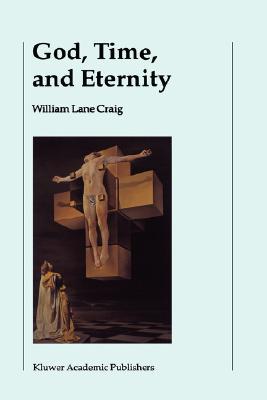
God, Time, and Eternity: The Coherence of Theism II: Eternity
by William Lane Craig
hose who think about time are thinking deeply. Those who think about God T are thinking even more deeply still. Those who try to think about God and time are pressing the very limits of human understanding. Undaunted, this is precisely the project which we have set for ourselves in this study: to try to grasp the nature of divine eternity, to understand what is meant by the amnnation that God is etemal, to fonnulate a coherent doctrine ofGod's relationship with time. This study, the second installment of a long-range research pro gram devoted to a philosophical analysis of the principal attributes of God, flows naturally out of my previous exploration of divine omniscience. ! For the most contentious issue with respect to God's being omniscient concerns divine foreknowledge of future contingents, such as free acts of human agents. The very concept of foreknowledge presupposes that God is temporal, and a good many thinkers, from Boethius to certain contemporary philosophers, have thought to avoid the alleged incompatibility of divine foreknowledge and human freedom by afflnning the timelessness of God. Thus, in examining the complex of issues surrounding the foreknowledge question, we found ourselves already immersed in the question of divine eternity.
Hardcover, 321 pages
Published September 30th 2001 by Springer



品牌集团


















© 2025 Bibleportal.com 版权所有.
William Lane Craig is an is an American Evangelical Christian apologist, theologian, and philosopher known for his contributions to the philosophy of religion, historical Jesus studies, and the philosophy of time. He is one of the most visible contemporary proponents of natural theology, often participating in debates on the existence of God. In 1979, Craig authored The Kalam Cosmological Argument, which is today the most published-on contemporary argument for theism in philosophy.
He is currently a Research Professor of Philosophy at Talbot School of Theology, Biola University. He is a fellow of the Discovery Institute's Center for Science and Culture, which is the hub of the intelligent design movement,[3] and a fellow of the International Society for Complexity, Information and Design (ISCID).[4] He is also a member of the American Philosophical Association, the American Academy of Religion, and a member and past president of both the Philosophy of Time Society and the Evangelical Philosophical Society.
... Show more